Misc
Here you can find various projects in the field of science communication that do not fall into other categories.
Playground Armenian Inventors: Science Inside Out
In 2026, I served as the scientific editor of the children’s playground Armenian Inventors: Science Inside Out / Գիտությունը՝ ներսից դուրս. Հայ գյուտարարները (Republic of Armenia, Yerevan, Misak Manushyan Park).
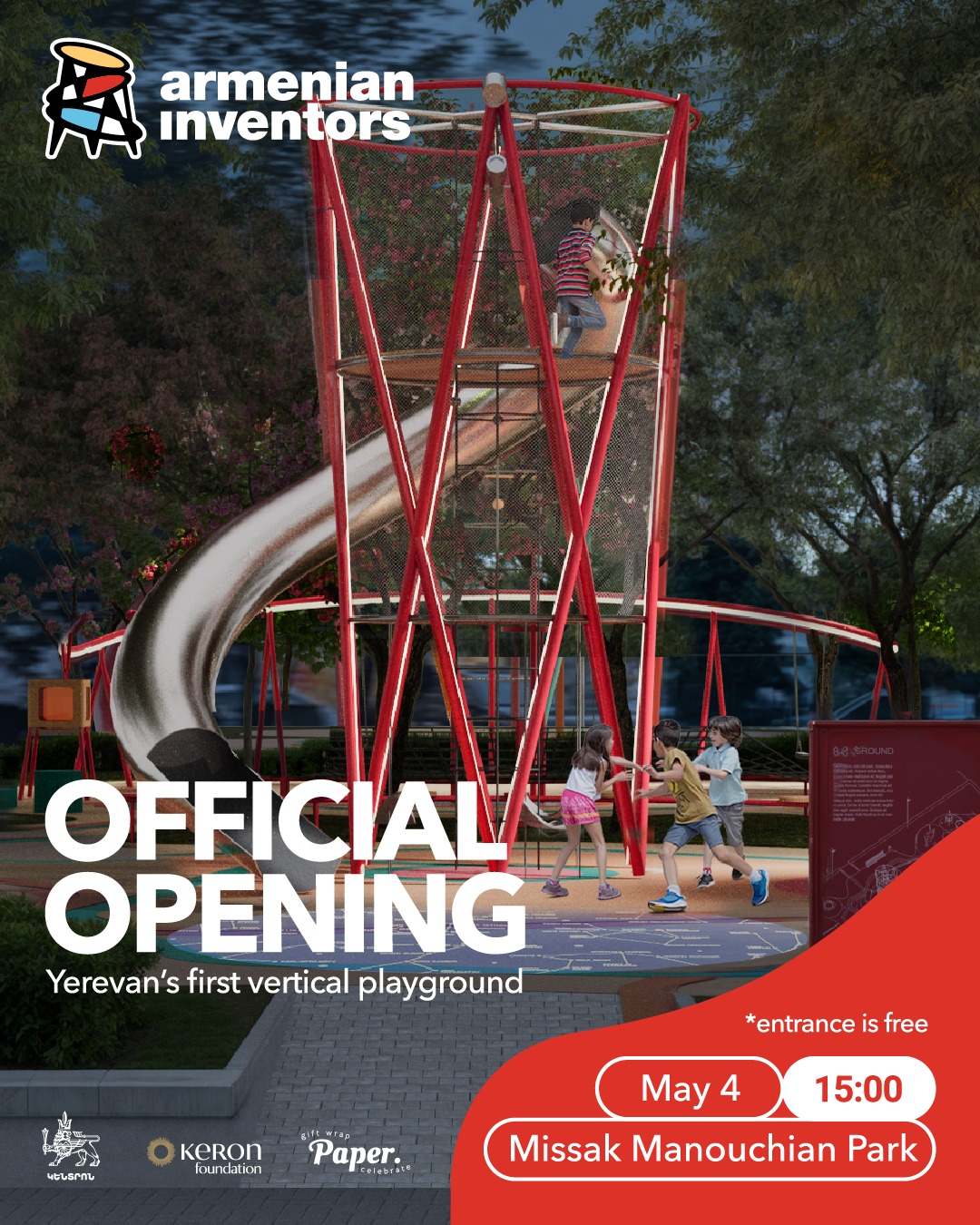
The playground became the third in a series of modern play areas built with the participation of the charitable organization Keron Foundation. It was designed by specialists from the company Ur Urban, who invited me to collaborate.
This is the first vertical playground in Yerevan; it invites children to climb three levels of varying height, reaching the tallest slide in the city — 7 meters. It includes zones for children aged 3–7 and 7–12, providing a multifunctional and active play experience.
The theme of the playground is Armenian scientists and inventors. Each installation is based on a particular Armenian invention and invites children to try themselves in a specific role. For example, as one of the pioneers of color television, Hovhannes Adamyan, or the inventor of a mechanical translator, Georges Artsruni. I acted as a consultant, proposed a number of ideas including the timeline and key figures, and reviewed and edited the texts and explanations for the playground elements.
Scientific Editing
In 2025, I served as the scientific editor of Peter Lidsky’s book “Aging: Why Does Evolution Kill?”
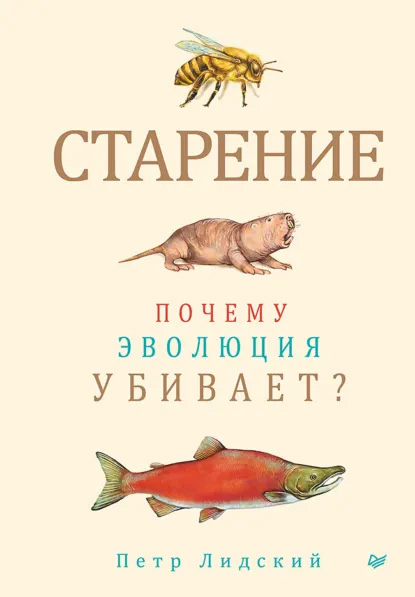 | Peter Lidsky. Aging: Why Does Evolution Kill? Popular science edition. St Petersburg: Piter, 2026. Series: New Science. ISBN 978-5-00116-736-5. The pathogen control theory described in this book challenges established dogmas. According to this theory, ageing is the result of a genetic programme that evolved to kill older organisms. Why? Older organisms are more likely to carry chronic infectious diseases that they may transmit to their peers. Thus, ageing is part of the immune system, protecting not the individual itself but its relatives. Much of the book is devoted to discussing phenomena not explained by classical theories of ageing. Why do some species not age? Why do others die immediately after reproduction? Why do queen bees live much longer than worker bees, despite having the same genetic makeup? Why do flying animals live longer than non-flying ones? The pathogen control theory provides answers to these questions and points to promising approaches for studying the mechanisms of human ageing and influencing them. In addition to scientific editing, I also acted as the agent, facilitating the publication of the book in print. |
Cover Blurbs
On several occasions, I wrote blurbs for the covers of other authors’ books.
 | Lewis Dartnell. The Knowledge: How to Rebuild Our World from Scratch. Popular science edition. Moscow: Alpina Publisher, 2017. ISBN 978-5-9614-6481-8. Back-cover blurbs by: Tim Skorenko, Anastasia Tmur, Grigory Tarasevich. |
 | Semyon Kibalo. Idea Hunter: How to Find Your Life’s Work and Make the World a Better Place. Popular science book. Moscow: Mann, Ivanov and Ferber, 2018. ISBN 978-5-00117-646-6. Back-cover blurbs by: Tim Skorenko, Yakov Novikov, Sergey Abdulmanov. |
 | Anton Pervushin. 12 Myths About Soviet Science Fiction. Popular science edition. St. Petersburg: AURAINFO Group & MID Group, 2019. ISBN 978-5-6040839-3-2. Back-cover blurbs by: Alexander Piperski, Tim Skorenko. |
 | Jerry Coyne. Faith Versus Fact: Why Science and Religion Are Incompatible. Popular science edition. Moscow: Alpina Publisher, 2021. ISBN 978-5-9614-6403-0. Back-cover blurbs by: Richard Dawkins, Tim Skorenko, Nodar Lakhuti. |
 | A. J. Baime. Go Like Hell: Ford, Ferrari, and Their Battle for Speed and Glory at Le Mans. Popular science book. Moscow: Alpina Publisher, 2022. ISBN 978-5-9614-7656-9. Back-cover blurbs by: Alexander Malenkov, Tim Skorenko, Anton Zolotov, Evgeny Kustov. |
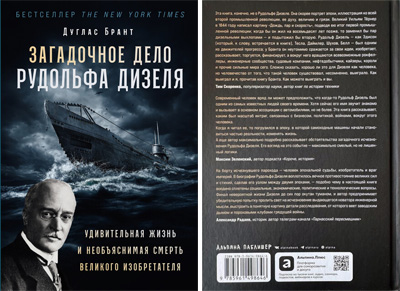 | Douglas Brunt. The Mysterious Case of Rudolf Diesel: Genius, Power, and Deception on the Eve of World War I. Popular science book. Moscow: Alpina Publisher, 2026. ISBN 978-5-9614-9864-6. Back-cover blurbs by: Tim Skorenko, Maksim Zelensky, Alexander Radaev.
|
Development of the Polytechnic Museum Exhibition (Moscow)
 | In 2018–2019, I was a member of the working group responsible for developing the historical exhibition of the Polytechnic Museum (Moscow). My role was the development of exhibits. As part of this work, I:
The working group also included Deputy Director General of the Polytechnic Museum Natalya Sergievskaya, producer, screenwriter, and journalist Alexander Urzhanov, architects and exhibition design specialists Kirill Ass and Nadezhda Korbut, among others. It was originally planned that the exhibition would be created and opened in 2021, but unfortunately, first financial and then political delays led to the fact that the reconstruction of the Polytechnic Museum has not been completed to this day. |
At various times, potential collaboration projects were also considered with the Machine Tool Museum (Tula), the Museum of Russian Impressionism (Moscow), the Museum of Moscow, and others.
Guided Tours
| 11 November 2017. Polytechnic Museum Open Storage (“Open Collections”) (Moscow, Technopolis Moscow, 42 Volgogradsky Prospekt, building 5). I conducted two guided tours of the Open Storage (topic: “The History of Russian Inventive Thought through the Exhibits of the Polytechnic Museum”). |