Lectures

One of the areas of my professional activity is delivering popular science lectures on various topics. The audience can vary widely: from primary school students to retirees, although I most often work with university students. I adapt each lecture to the social and age profile of the expected audience and modify it depending on the situation. My lectures are interactive and involve direct audience participation, discussion, and suggestions. As a result, no two presentations are ever identical.

Popular science lectures

How to Become an Inventor

How to Become an Inventor

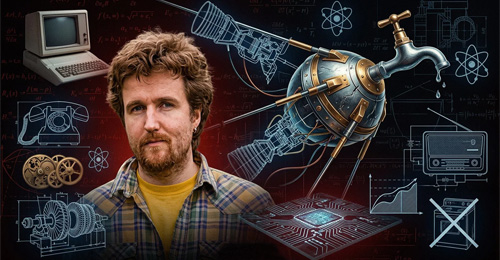
Interactive lecture. Who comes up with new gadgets and devices—and how? How did Dean Kamen conceive the idea of the Segway, and how did Bertrand Piccard come up with a solar-powered aircraft? What knowledge and mindset are required to invent something useful? How can you check whether your idea has already been invented by someone else? How do you secure funding for your project and turn it into a business? During the lecture, participants attempt to discover their inner inventor by solving a series of challenges on the spot.

The lecture is built around continuous dialogue with the audience and actively incorporates ideas and responses from the floor. As a result, the content is constantly evolving and being refined. It was originally developed for the “Innovation” track of the Seliger Forum 2014 and has since been delivered at various universities (MAI, Bauman MSTU, Belgorod State University, among others).

Duration: 1 hour 30 minutes (can be shortened to 1 hour or extended to 2 hours).
Audience: 6+ (suitable for both adults and children).

Scientific and Technological Breakthroughs of the 21st Century

Scientific and Technological Breakthroughs of the 21st Century

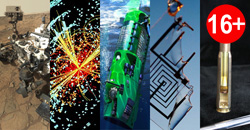
Interactive lecture. Over the past 26 years of the 21st century, humanity has made numerous major scientific and technological breakthroughs capable of transforming our lives. From the discovery of the Higgs boson and the use of 3D scanning in paleontology to the first Mars rover and the mapping of the human genome, from guided bullets to electronic cigarettes—innovations follow one another at an accelerating pace. What exactly have we invented and implemented in recent years?

The lecture is based on active dialogue with the audience. Its content is continuously updated to reflect new discoveries and research, as I closely follow developments in the global scientific and technological landscape. It was originally developed for the “Innovation” track of the Seliger Forum 2014 and has also been presented at a number of science festivals.

Duration: 1 hour 30 minutes (can be extended to 2 hours).
Audience: 16+.

Charlatan Gadgets: From Aura Correctors to “Kremlin Pills”

Charlatan Gadgets: From Aura Correctors to “Kremlin Pills”

Iridodiagnostics and electroacupuncture, aura imaging and “eniomodulators,” space harmonisers and functional state correctors, radionics and “nooculons”—the range of nonsense invented by fraudsters in pursuit of profit is astonishing. This lecture provides an overview of pseudoscientific devices of all types.

The lecture classifies such pseudo-devices, provides examples for each category, explains how to distinguish them from legitimate technologies, and demonstrates how these so-called gadgets actually work (in most cases, they are little more than boxes with lights inside). The discussion covers not only “medical” devices, but also “protective,” “magical,” and other types.

Duration: 1 hour 30 minutes (can be extended to 2 hours).
Audience: 16+.

The Life and Inventions of Nikola Tesla: Separating Fact from Fiction

The Life and Inventions of Nikola Tesla: Separating Fact from Fiction

Few scientists of the 20th century left behind as many mysteries and unanswered questions as Nikola Tesla. On the one hand, his contribution to science is undeniable; on the other, the number of myths and legends surrounding Tesla far exceeds the amount of reliably verified information.

Where did these legends come from? Which of Tesla’s inventions made a genuine impact on science? Why is Tesla considered the inventor of radio in his home country? Did he really develop a method for wireless energy transmission, and what was the true purpose of the famous Tesla Tower, often described as a teleportation device? Is there any truth to claims linking him to major 20th-century mysteries such as the Philadelphia Experiment or the Tunguska Event?

This lecture explores these questions, examining both Tesla’s real achievements and the myths surrounding them, as well as the personality, habits, and eccentricities of this remarkable inventor.

Duration: 1 hour 30 minutes (can be extended to 2 hours).
Audience: 16+.

Albert Einstein: The Greatest Scientist of the 20th Century or a Media-Created Myth?

Albert Einstein: The Greatest Scientist of the 20th Century or a Media-Created Myth?

If you ask a random person to name the greatest scientist of the 20th century, there is a 90% chance they will answer: Albert Einstein. His name has become synonymous with genius, and his theory of relativity is often compared in significance only to the laws of Isaac Newton.

But who was Einstein in reality? Was he truly a cornerstone of modern physics, or a figure whose reputation was amplified by the media? How did his theory gain acceptance in the scientific community? Why did he receive the Nobel Prize for explaining the photoelectric effect—a contribution often seen as less groundbreaking than special or general relativity? What role did he play in the Manhattan Project, and why did his portrait appear on the cover of Time alongside a nuclear explosion?

This lecture takes a balanced and objective look at Einstein, aiming to separate fact from myth and to present a clearer picture of who he really was—both in everyday life and in the broader context of human history.

Duration: 1 hour 30 minutes (can be extended to 2 hours).
Audience: 16+.

Invented in Russia

Invented in Russia

Historical lecture. Russian inventors have made a significant contribution to global technological development—particularly in metallurgy, shipbuilding, weapons technology, and industry, not to mention more specific inventions such as the backpack parachute or the gyrocar.

However, genuine Russian achievements are often overlooked, while numerous myths and misattributions circulate online—the bicycle, the steam engine, and the airplane are frequently (and incorrectly) claimed as Russian inventions. Yet there is, in fact, much to be proud of.

This lecture explores the real history of Russian invention from Peter the Great to Nicholas II, while also debunking persistent myths and misconceptions.

The lecture is built around dialogue with the audience.
Duration: 1 hour 30 minutes (can be extended to 2 hours).
Audience: 16+.

Not Invented in Russia

Not Invented in Russia

This historical lecture examines a number of myths and misconceptions about inventions allegedly created in Russia: Artamonov’s bicycle, Kryakutny’s hot-air balloon, the Putilov–Khlobov automobile, Blinov’s tractor, and others.

It also addresses broader patterns of “credit disputes” in the history of invention—cases such as Mozhaysky’s aircraft, Grigorovich’s flying boat, and Alexandrovsky’s torpedo, where real inventions existed but were not the first of their kind globally, despite later being presented as such in Soviet or Russian narratives.

The lecture is built around dialogue with the audience. It was originally developed for the Skepticon 2017 conference and has since been presented at various science festivals.

Duration: 1 hour 30 minutes (can be extended to 2 hours).
Audience: 16+.

Lectures on art

Contemporary Kinetic Art

Contemporary Kinetic Art

For many years, I curated a section on kinetic art for the magazine Popular Mechanics and have maintained ongoing contact with artists working in this field. This lecture explores trends in contemporary kinetic art and its various directions through the works of leading sculptors, including Theo Jansen, Brad Litwin, Nemo Gould, Chris Eckert, Keith Newstead, Gregory Barsamian, Choe U-Ram, Ivan Pestalozzi, Anne Lilly, Daniel Rozin, and others.

The lecture covers a wide range of kinetic forms, including mechanical and electronic sculptures, Rube Goldberg machines, light installations, and more.

The lecture was significantly revised and expanded for the project “Laboratory of the Future. Kinetic Art in Russia,” presented by the St Petersburg Manege in collaboration with the State Tretyakov Gallery. The presentation is accompanied by visual materials and video excerpts, and the content is continuously updated and refined.

Duration: 1 hour 30 minutes (can be shortened to 1 hour or extended to 2 hours).
Audience: 18+ (preferably 25+).

Contemporary Land Art

Contemporary Land Art

Land art is an artistic movement in which the artwork is inseparably connected to the natural landscape, using it as a “canvas” or as an integral element of the work itself. As part of my popular science work, I developed a large-scale project entirely devoted to land art, which led me to engage deeply with the field, connect with a number of international artists, and develop my own classification within the genre.

This lecture explores trends in contemporary land art and its various directions through the works of leading artists, including Olga Ziemska, Karin van der Molen, Nikolay Polissky, Nancy Holt, Dennis Oppenheim, Kristián Balogh, Sébastien Preschoux, Stan Herd, Iván Juárez, and others.

The lecture is accompanied by visual materials and video excerpts. Its content is continuously updated and refined.

Duration: 1 hour 30 minutes (can be shortened to 1 hour or extended to 2 hours).
Audience: 18+ (preferably 25+).

What Is Art Brut?

What Is Art Brut?

Art brut is most commonly known as “the art of the mentally ill”—a perception rooted in the fact that the term was introduced in 1945 by the artist Jean Dubuffet to describe a collection of works created by psychiatric patients, children, non-European “outsiders,” and self-taught artists.

In reality, art brut is a broad branch of primitive or “raw” art that disregards conventional artistic principles such as realism, proportion, and perspective—but is by no means limited to artists with developmental or mental conditions. The term encompasses a wide range of styles, techniques, and themes, and extends beyond painting into sculpture, photography, and even architecture.

This lecture explores trends in art brut and its various directions through the works of both historical and contemporary artists, including Adolf Wölfli, Friedrich Schröder-Sonnenstern, Aloïse Corbaz, Pierre Vuitton, Martín Ramírez, Raphaël Lonné, Judith Scott, Alexander Lobanov, Henry Darger, Ferdinand Cheval, and others.

The lecture is accompanied by visual materials and video excerpts. Its content is continuously updated and refined.

Duration: 1 hour 30 minutes (can be shortened to 1 hour or extended to 2 hours).
Audience: 18+ (preferably 25+).

Development of additional lectures

I can quickly develop and propose a range of additional topics that may be of interest to a particular audience—provided they fall within my professional expertise or hobbies. Each lecture can be adapted for virtually any audience, from primary school students to an unlimited extent. All lectures are based on continuous interaction with the audience. Within any topic, it is possible to develop not just a single lecture but a series of lectures devoted to specific subtopics, technical details, or historical episodes. The duration of a single lecture is up to two hours.