Handmade
For many articles in Popular Mechanics, I built various devices and mechanisms with my own hands. Rather than just reading about something, it’s better to try it yourself, isn’t it? Selected examples are presented here (I have written more than 30 such hands-on materials).
|
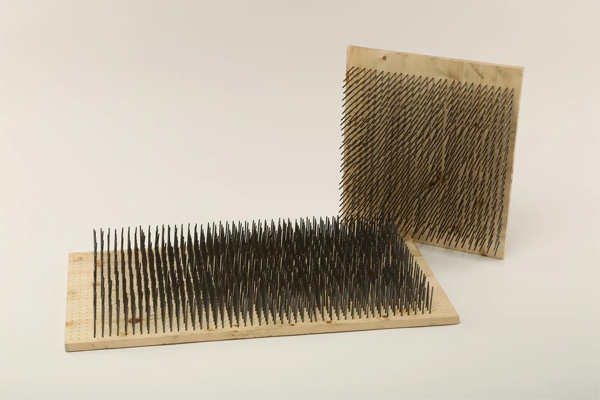
Bed of Nails. Many people believe that lying on nails is difficult. In a way, they are right—but on the other hand, it’s simply a matter of knowing how. I made two boards with 1,222 and 676 nails respectively and successfully lay on the larger one, placing the smaller on my chest as a pedestal for a “human load.”
|
|
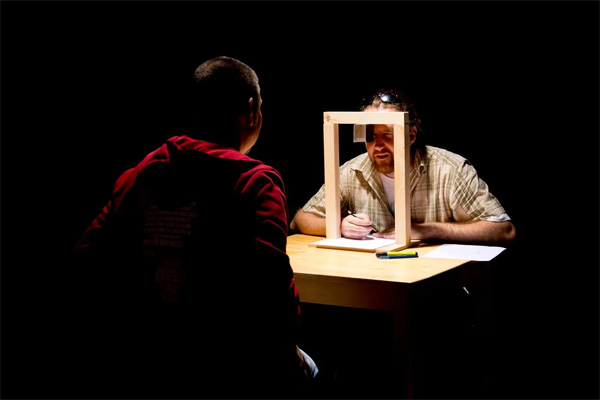
Camera Lucida. The camera lucida is a popular 19th-century optical device that allows an artist to trace the outlines of real objects. I thought: why not build one and test it on a live subject? A few wooden slats, a sheet of cardboard, a glass plate—and the device is ready to use.
|
|
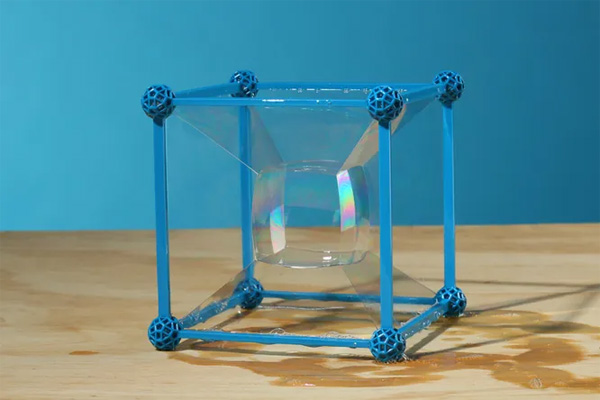
Cubic Bubble. A bubble is spherical because a soap film naturally assumes the shape with the smallest possible surface area—the optimal form. But nature can be tricked. To do this, you need to build a cubic frame and blow a bubble inside it.
|
|
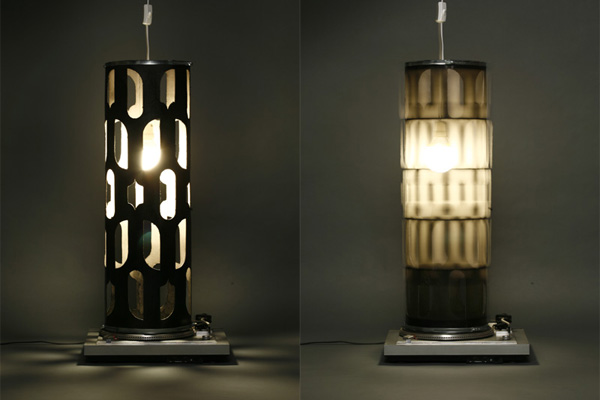
Dreamachine. The Dreamachine by Burroughs, Gysin, and Sommerville is a stroboscopic device created in 1961 based on a record player. It was intended to induce a trance-like state similar to the effects of LSD. I built mine from a large sheet of cardboard using a cutter and a can of black spray paint. It rotates on a standard turntable.
|
|
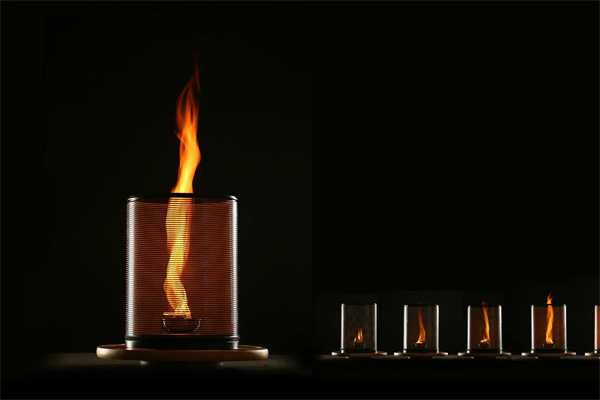
Fire Tornado. Once I built a device to demonstrate the fire tornado effect—a rotating platform with a mesh screen. Depending on the rotation speed, it can produce a real fire vortex of a certain height. Incidentally, the screen was just an ordinary office wastebasket.
|
|
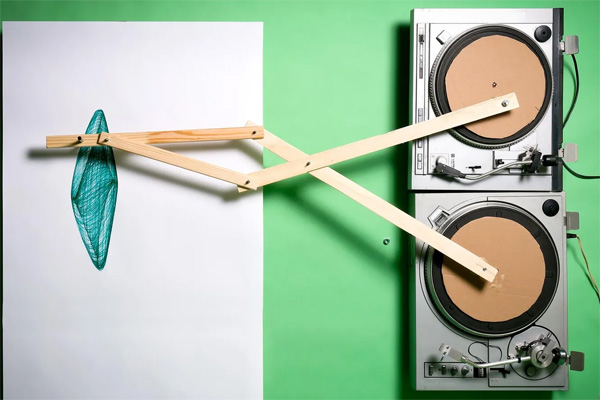
Pintograph. Using two Soviet record players—Vega EP-110 and Arktur-006—I built a pintograph, a type of harmonograph in which oscillating points move along ring-shaped trajectories. The pintograph produces very striking harmonic patterns, a special case of which are the well-known Lissajous figures.
|
|
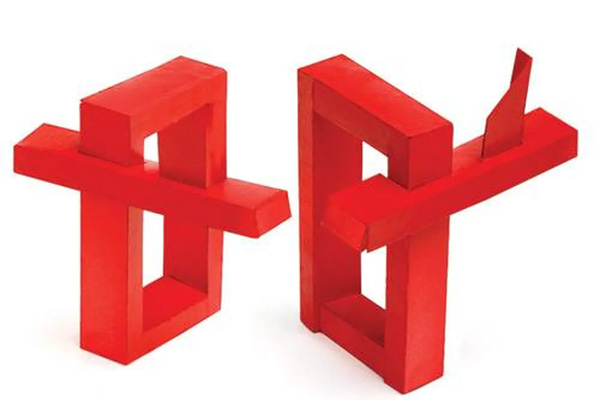
Reutersvärd Impossible Figures. The Swedish artist Oscar Reutersvärd (1915–2002) created more than 2,500 impossible figures in his lifetime. I wondered—are they really as impossible as they seem? So I made several of them—including the Penrose triangle and some of Reutersvärd’s own works—out of colored cardboard. It turned out to be quite simple: nothing is truly impossible.
|